Large-format fiberglass structures and sculptures
Large scale and design freedom without the weight of traditional construction
Fiberglass makes it possible to create large, three-dimensional objects in shapes that would be difficult, heavy, or disproportionately expensive to produce in metal, wood, or other traditional technologies. A multi-metre figure, an oversized product, a set piece, a branded object, or a custom installation can be produced as a relatively lightweight, precisely formed structure.
This solution works particularly well wherever the object is meant to attract attention, define the character of a space, and be designed specifically for a given location.
From a small product to a multi-metre object
One of fiberglass’s biggest advantages is that it can be scaled freely. A product, sign, character, detail, or an entirely bespoke form can be transformed into a three-dimensional object several metres tall.
With larger dimensions, the form can be divided into transport segments and only assembled on-site. This makes it possible to deliver objects larger than available doorways, lifts, or access routes.
Almost any shape and surface finish
The technology offers a great deal of freedom for creating organic geometry, curves, figures, product replicas, and complex 3D forms. As a result, the design doesn’t need to be simplified purely due to material limitations.
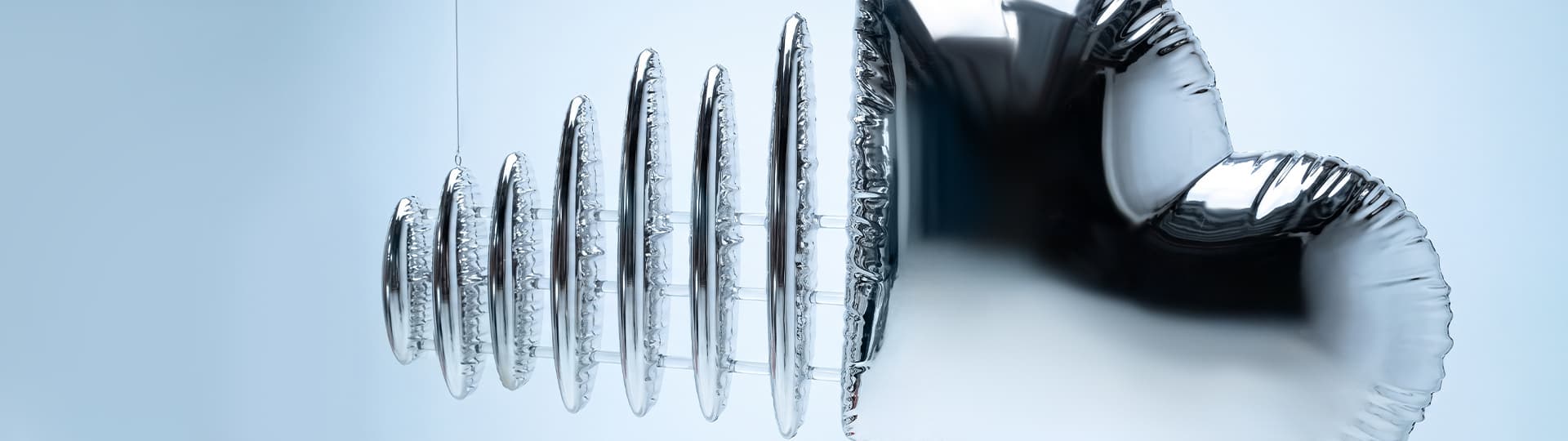
The surface can be matte, satin, or high-gloss, produced in a specified colour scheme, with a metallic effect, or with a custom decorative finish.
What can be made from fiberglass?
Fiberglass can be used to produce large-format figures, sculptures, oversized product models, promotional objects, set pieces, spatial décor, brand installations, and custom forms designed for a specific project.
The technology works well in, among others, shopping centres, hotels, showrooms, theme parks, event venues, retail spaces, exhibitions, and in public spaces.
An object can become a distinctive focal point in a space
A large 3D form works differently than standard graphics or flat advertising. It can be visible from far away, guide visitors to a specific location, build brand recognition, or become a feature where people stop and take photos.
That’s why fiberglass is also a strong choice when the goal isn’t just decoration, but creating a recognisable focal point or a brand-related experience.
The design must consider more than just appearance
With large objects, the internal structure, weight, manufacturing split, joining method, transport, and the final mounting or base/foundation solution all matter.
It’s worth resolving these aspects at the design stage. This helps preserve the intended form while preparing the object so that transport and installation are possible without ad-hoc changes to the finished design.
For interiors and outdoor spaces
Fiberglass objects can be prepared both for indoor use and for properly designed outdoor applications. The structure, laminating process, finishing method, and mounting should be selected to suit the installation site and operating conditions.
For large outdoor objects, stability, surface durability, loads, and the way the object is anchored become particularly important.