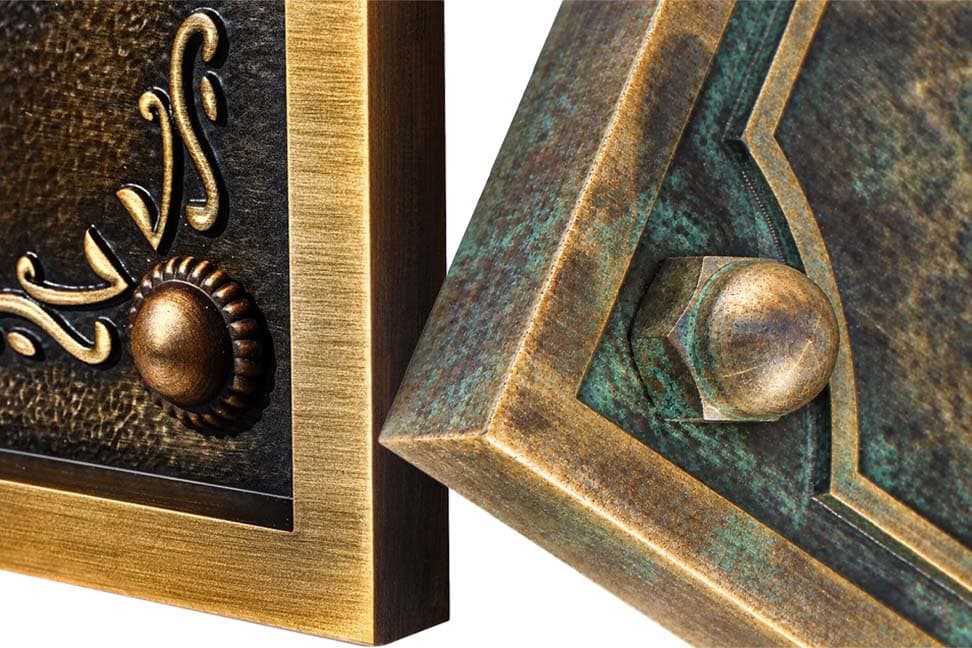
Polished brass can win you over at first glance. It has a warm tone, a metallic sheen, and is associated with plaques mounted on prestigious buildings. However, when the question comes up—brass or aluminium for an outdoor plaque—the biggest difference isn’t always visible in a sample. Time is what reveals it.
Brass isn’t a bad material, but its natural ageing needs to be a deliberate part of the design. If the plaque is meant to retain its planned colour and a consistent surface appearance, properly finished aluminium often gives you greater control over the result.
Problem: new brass doesn’t show what it will look like later
Brass is an alloy of copper and zinc, so its surface reacts with the environment. Under atmospheric exposure, it loses its initial shine, becomes dull, and gradually changes colour. It can take on brown or grey tones, and under certain conditions, even a greenish hue.
The pace and direction of these changes depend on the alloy composition and the installation location. Factors include moisture, airborne pollutants, sulphur compounds, chlorides, and how long water remains on the surface. A plaque installed under a canopy can therefore look very different from an element exposed directly to rain.
A colour change doesn’t mean brass suddenly stops being durable. The reaction layer that forms can protect the metal beneath it. The issue arises when the client expected a bright, golden shine and the natural ageing process wasn’t accounted for in the design.
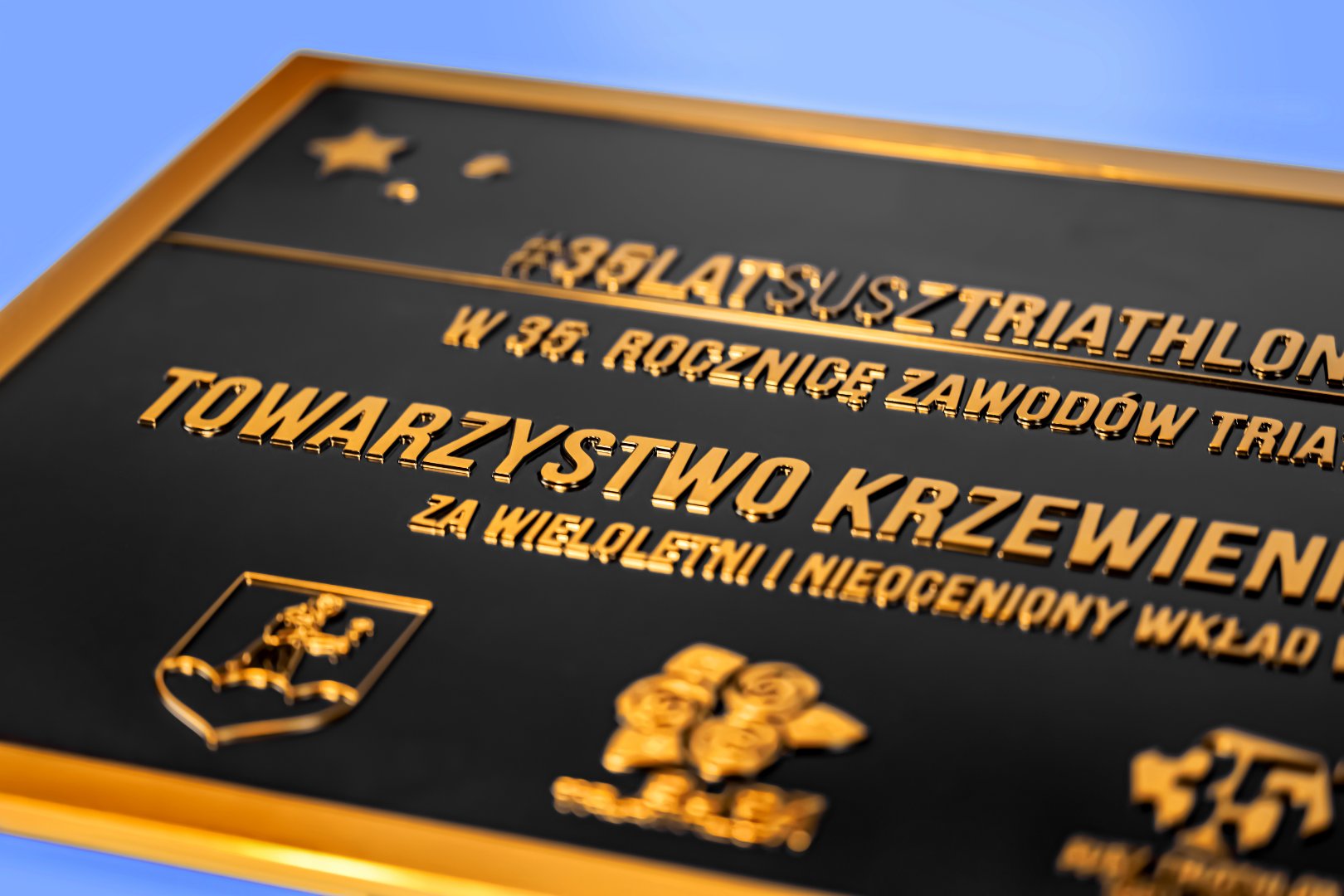
Solution: first define what the plaque should look like after a few years
Material selection should start with the expected surface appearance. Can the plaque darken and develop an individual character? Is patina the intended effect, or does the client expect a colour that stays as close as possible to the design?
The bright look of brass can be protected with a suitable coating, but that doesn’t change its inherent properties. Protection performance depends on surface preparation, the type of protective system, application quality, and exposure conditions. The coating also needs to be monitored, because it doesn’t turn the plaque into a completely maintenance-free element.
Brass makes sense in projects where natural colour change is accepted—or even desired. It suits historic buildings, commemorative plaques, and installations where the metal’s ageing contributes to the character of the place. However, it shouldn’t be chosen solely because a new sample looks attractively golden.
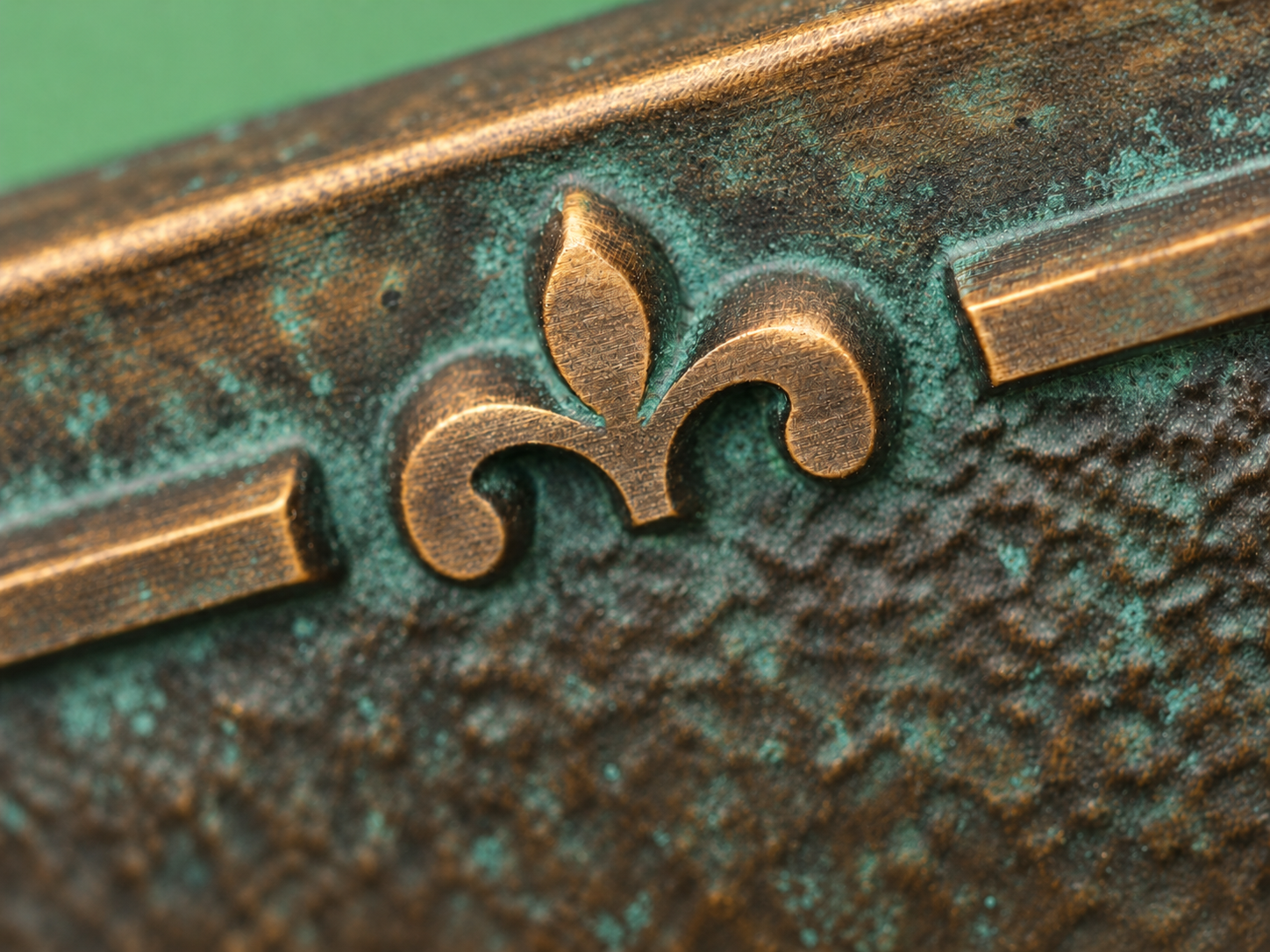
Problem: a golden colour is automatically associated with brass
Clients often ask for brass even though their real goal is a specific colour and metallic effect. Those are two different decisions. The material determines the plaque’s properties, while the appearance also depends on texture, relief, machining, and how the surface is protected.
Making a plaque from aluminium doesn’t mean it has to be silver, raw, or technical-looking. Aluminium can be mechanically finished, anodised, and processed with other finishing methods. This makes it possible to achieve matte or brushed surfaces, as well as tones associated with gold or bronze.
Aluminium also reacts with the environment and isn’t completely unchanged over time. However, it forms a natural oxide layer that can be built up in a controlled way through anodising. A properly specified finishing system helps protect the metal and plan its colour before production starts.
Solution: aluminium offers greater control over the finish
The advantage of aluminium is the ability to separate the structural material from the plaque’s desired colour. The client doesn’t need to choose brass just because they want a warm, metallic tone. The finish can be developed to match a sample, the building’s architecture, and the rest of the signage.
The anodised layer is created from the aluminium surface, so it is integrally bonded to the metal. Its appearance and durability, however, depend on the alloy, surface preparation, layer thickness, colouring method, and sealing. For that reason, the phrase “anodised aluminium” alone is not yet a complete plaque specification.
When choosing, you also need to consider the location, exposure to rain, pollution, installation method, and maintenance expectations. At PRETENDE, material and finish selection is part of the design process, so aluminium, brass, or another metal can be matched to the look and conditions of a specific project.
A photo of the finished plaque primarily shows the result of the surface work: background-to-letter contrast, texture, colour, and how the relief is brought out. The metal type alone doesn’t determine the overall impression. What happens to it during finishing is just as important.
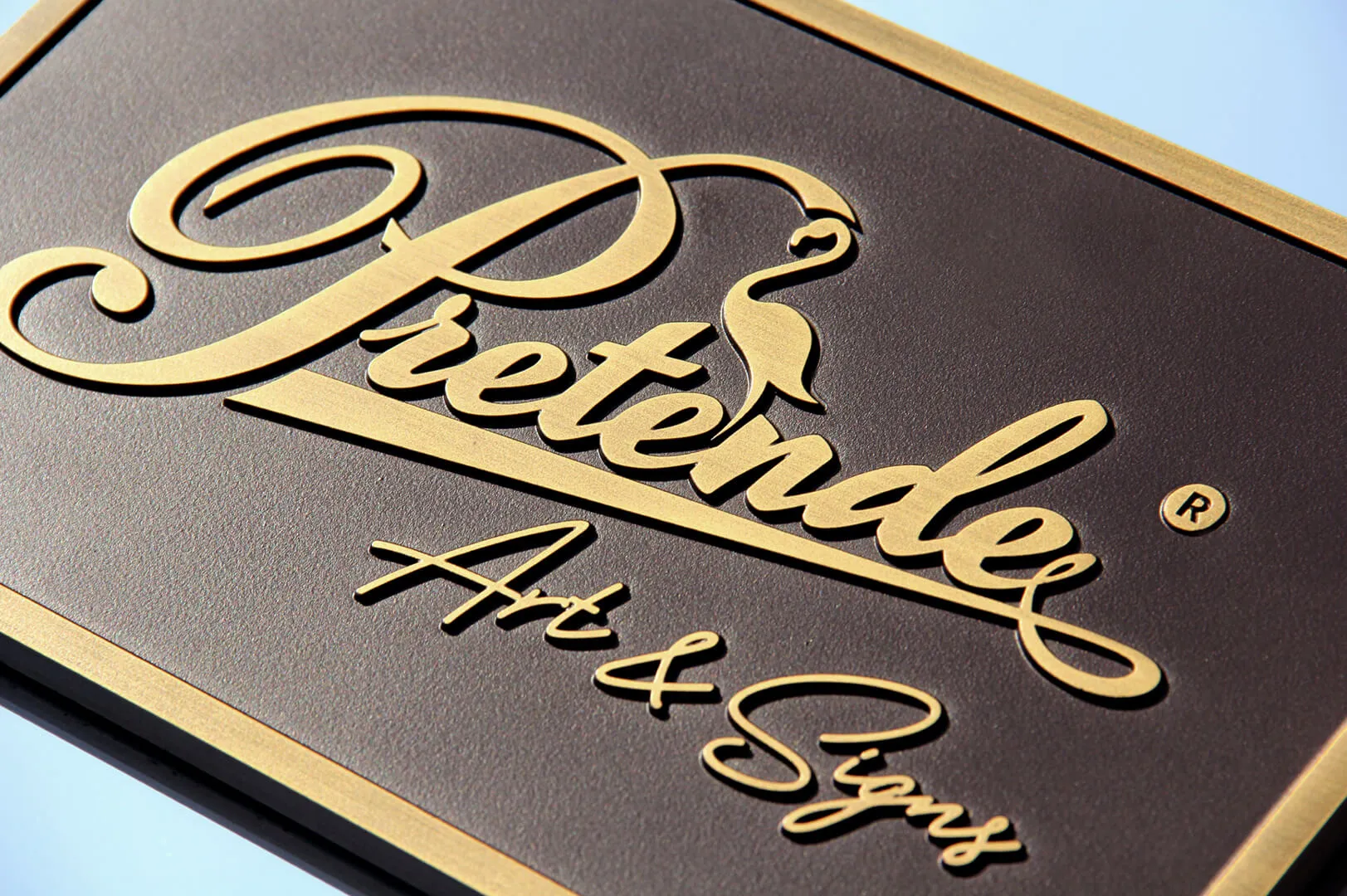
Custom aluminium plaques
Before preparing the design, it’s worth defining the installation location, the desired colour, and how the surface may change over time. You’ll also need the dimensions, copy, logo or coat of arms, photos of the surroundings, and information about the planned mounting method. A colour sample or a photo of the metal you want to reference will also be helpful.
This set of information makes it possible to compare materials based on their real properties rather than just their names. If natural darkening and patina are part of the concept, brass may be a justified choice. If controlled colour, lower weight, and finishing flexibility matter more, aluminium is worth considering.
The best material for a plaque doesn’t come from the belief that one metal is more prestigious than another. It comes from the answer to a simpler question: what should the plaque look like after installation, and what result do we expect after a few years?
Frequently asked questions
1. Does brass rust?
Brass doesn’t rust like ordinary steel, but its surface becomes dull, darkens, and can develop a patina. This is a natural reaction of a copper alloy with the environment.
2. Is brass a bad material for an outdoor plaque?
No. Brass is a good choice if the client accepts natural colour change or if patina is part of the design. However, it won’t be suitable everywhere a consistently bright, golden shine is expected.
3. Doesn’t aluminium change outdoors?
Aluminium also reacts with the environment, and the effect depends on the alloy and surface protection. Properly specified anodising or another finishing system, however, allows you to control its appearance more effectively.
4. Can an aluminium plaque be gold or bronze?
Yes. Aluminium can be given a metallic finish in shades of gold, champagne gold, or bronze. The exact effect should be agreed based on a sample and the selected technology.
5. Does protecting brass stop patina formation?
A suitable coating can reduce the surface’s contact with the environment and preserve its initial look for longer. However, it doesn’t mean the plaque won’t require inspection or later maintenance.
6. What needs to be defined before choosing a material?
The most important factors are the installation location, desired colour, acceptable appearance change, maintenance approach, and the building’s character. Only then can you responsibly compare brass, aluminium, and other metals.