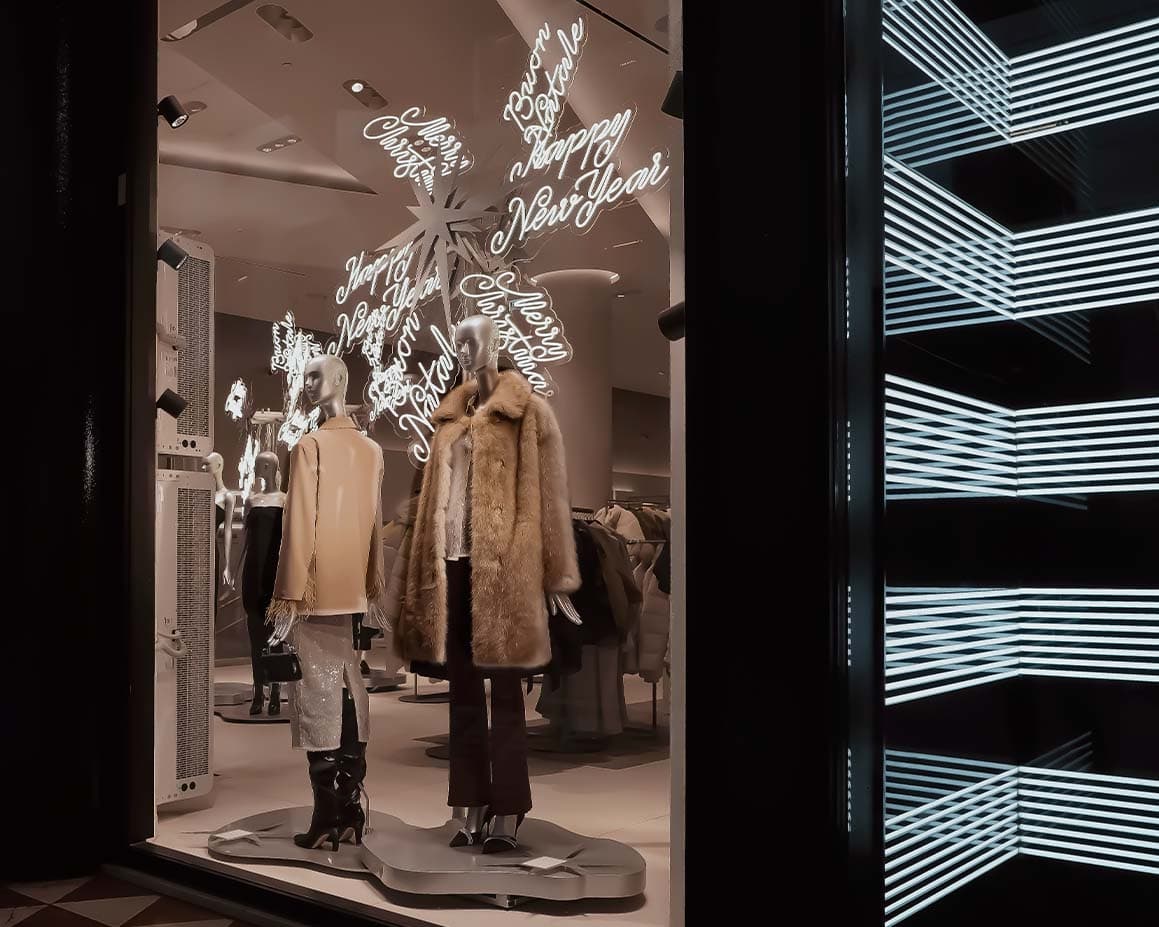
A storefront window can change for the holidays, a collection launch, the start of summer, or sale season. New colors, products, and themes draw attention, but the brand identity should remain clear. If the décor completely takes over the space, passersby may remember the striking set design-but not the company behind it. The window looks good, but does less to build brand recognition.
The solution is to divide the display into fixed and changeable elements. A logo, lettering, lighting, or a distinctive 3D detail creates the brand’s foundation, while seasonal décor changes the context. This way, each version can look different, and the storefront remains recognizable.
Problem: seasonal décor hides the brand
Décor created for a specific season can easily become the strongest element in the window. A large installation, bold graphics, or a promotional headline can overpower the logo and make the store name harder to read. Passersby notice the display theme, but don’t always know which brand it belongs to.
The issue doesn’t have to come from too much décor. Sometimes it only takes the wrong placement of elements, insufficient contrast, or lighting aimed only at the products. The logo stays where it is, but visually stops taking part in the overall composition.
Solution: brand identification as a fixed anchor in the window
Well-chosen signage maintains storefront recognition regardless of season. It can be a 3D logo, brand name, symbol, lightbox, an illuminated feature, or a detail designed specifically for the space. The signage doesn’t have to sit directly on the glass. It can work deeper in the display, above the entrance, or against a backdrop visible from the street.
The logo should be part of the composition-not an add-on placed wherever there’s space. Check its scale, contrast, mounting height, and visibility by day and after dark. Its relationship to products, lighting, and reflections on the glass also matters.
A fixed element doesn’t have to be large to bring order to the window. A distinctive type style, material, side color, or illumination method may be enough so that even after the décor changes, it’s still clear which brand the space belongs to. This kind of detail works especially well when it also appears inside the store or at other customer touchpoints.
Problem: every seasonal change starts from scratch
A window designed separately for each holiday or campaign can quickly lose consistency. In December the brand uses one style of lettering, in spring a completely different typography, and during sales it covers the display with oversized graphics. Each version may look fine on its own, but together they don’t form a recognizable visual language.
Starting from scratch also complicates installation. New elements may require additional fixing points, changes to lighting, or a different layout of fixtures and fittings. Without an established base, every décor swap becomes a separate project that has to be re-adapted to the window.
Solution: a fixed base with interchangeable seasonal elements
You can plan the storefront so the brand signage stays in place and the set dressing changes around it. The fixed base can be a logo, 3D lettering, an illuminated frame, a metal feature, or a structural element in brand colors. The interchangeable layer includes products, graphics, campaign taglines, and seasonal décor.
This split gives flexibility without losing consistency. In winter, the logo can work against light and bright forms; in summer, among lighter materials; and for a product launch, in a more minimal display. The surroundings change, but the way the brand is presented remains recognizable.
The design should account for fixings, access to power, and the sequence for swapping individual parts. You also need to leave enough clear space around the logo. Décor can come close to the signage, but it shouldn’t cover its outline or change how the name is read.
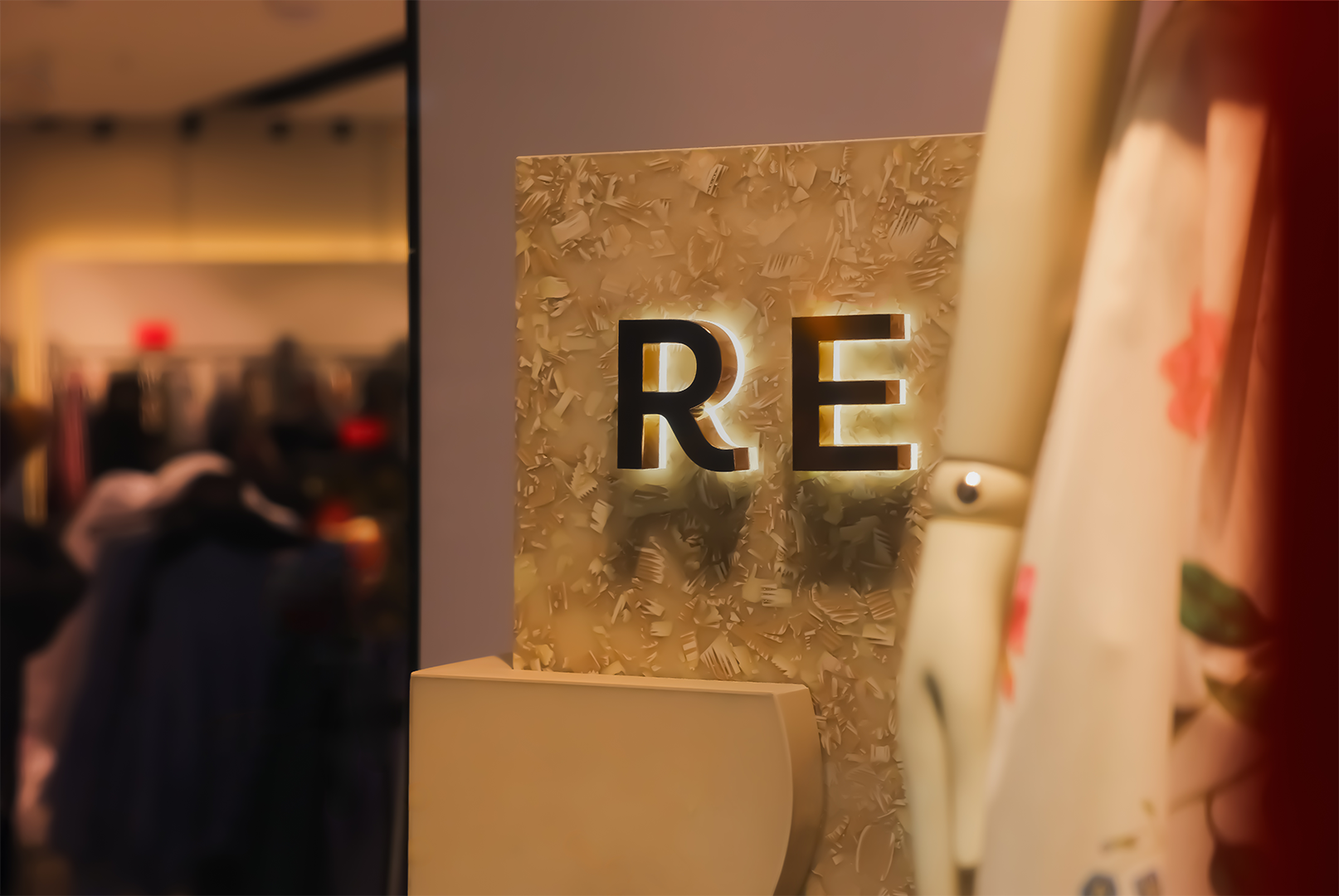
Custom storefront signage
Storefront signage can include 3D logos, lettering, illuminated elements, lightboxes, metal details, and structures designed to work with interchangeable décor. The right solution depends on the store architecture, installation location, visibility from the street, lighting conditions, and the planned way the display will be updated.
To prepare a design, we need: the logo file, photos of the storefront from outside and inside, approximate dimensions, and information about mounting points and access to power. It’s also worth specifying which elements should remain permanent, how often the décor will change, and from what distance the signage should be legible.
Well-designed signage makes it possible to change the look of the window without losing brand recognition. A logo, lettering, or a 3D detail creates a fixed base around which you can build successive versions of the display.
Frequently asked questions
1. Does the logo have to be placed directly on the glass?
No. The logo can be mounted deeper inside the window, on a wall, on a display structure, or above the entrance-as long as it remains clearly visible from the street.
2. Should seasonal décor use only brand colors?
It doesn’t have to be limited to the brand palette, but it should have a clear relationship to it. Seasonal colors can appear in the background and accessories, while the logo keeps its established finish.
3. What signage works well in a changeable window display?
It can be a 3D logo, an illuminated sign, a lightbox, a metal detail, or another distinctive brand identifier. The choice depends on the size of the window, the installation location, and the planned display changes.
4. Can an illuminated element be used year-round?
Yes if its form comes from the brand identity rather than a single seasonal campaign. What can change is the surrounding décor, the background color, or the products being showcased.
5. How do you combine signage with seasonal décor?
First, designate a permanent position for the logo or another brand mark. Then plan the interchangeable décor layer so it doesn’t reduce the visibility of the signage.
6. What should be prepared before commissioning a design?
You’ll need photos of the storefront, its dimensions, the logo file, installation and power information, and a description of the planned seasonal changes. Photos taken after dark are also helpful, as they show how the lighting works and the reflections in the glass.